Miscellaneous
NINETEENTH CENTURY SLAVE TRADING IN TRINIDAD
BURNLEY
(William Hardin, 1780-1850, American born, British-Trinidadian Planter)
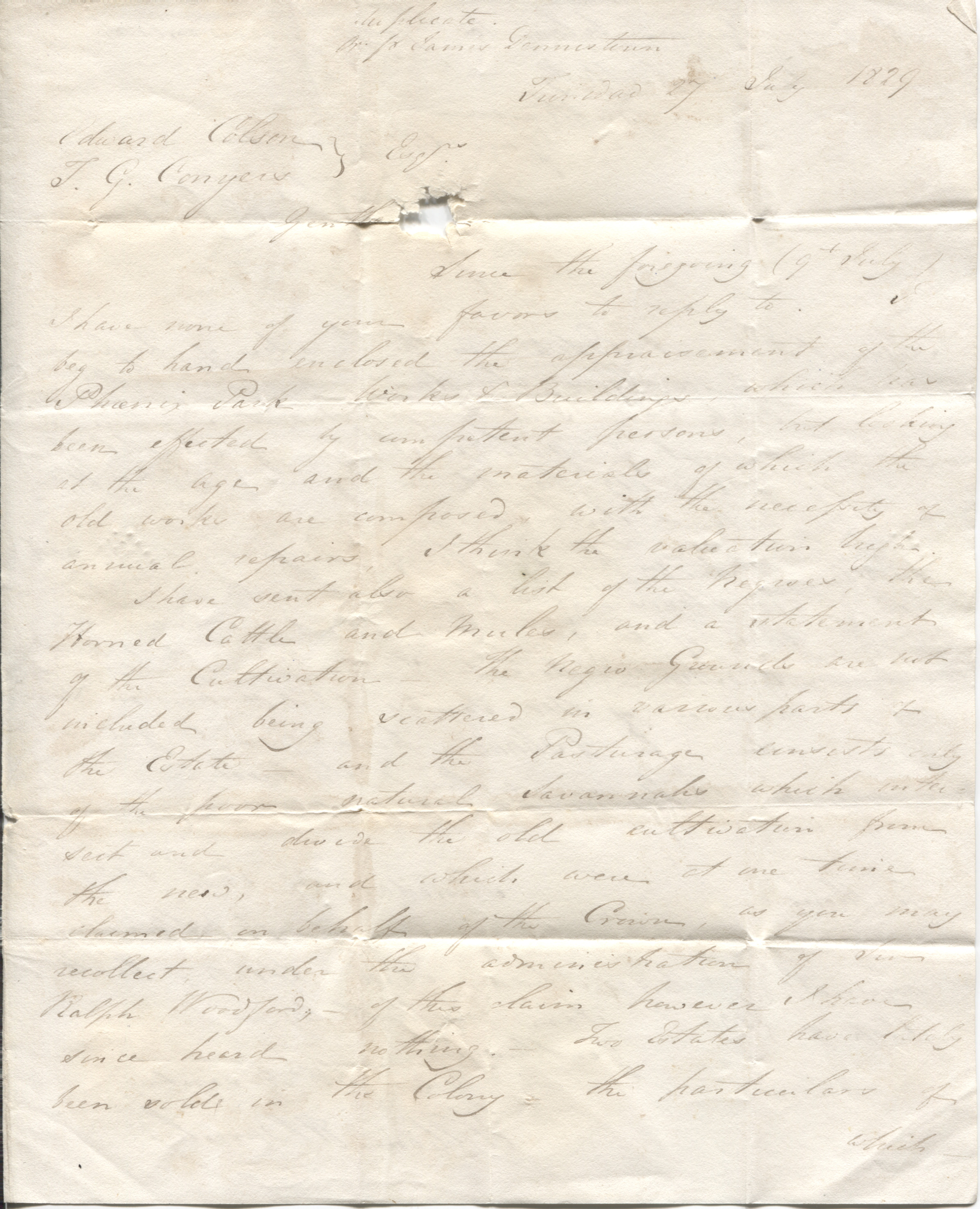
Fine Autograph Letter Signed to Edward Colson and T. G. Conyers headed Duplicate for James Dennestoun
saying he begs to hand enclosed the appraisement of the Phoenix Park works & buildings which has been effected by competent persons, but looking at the age and the material of which the old works are composed, with the necessity of annual repairs, I think the valuation high. I have sent also a list of the Negroes, the Horned Cattle and Mules, and a statement of the cultivation. The Negro Grounds are not included, being scattered in various parts of the Estate - and the Pasturage consists only of the poor natural Savannahs which intersect and divide the old cultivation from the new and which were at one time claimed on behalf of the Crown, as you may recollect, under the administration of Sir Ralph Woodford. Of this claim. however I have since heard nothing. Two estates have lately been sold in the Colony, the particulars of which, I annex below for your Government..., after his signature there is his report, also signed Mount Pleasant Estate - in the Quarter of Quessa with 110 slaves, abundantly supplied with stock &c, sold by Mr Robert Neilson on account of Messrs Protheroe of Bristol for £18000 Stg payable in 6 years - £3000 pa without Interest. River Estate in the Quarter of Diego Martin with 215 slaves, a water mill,, with works entirely of mason work and in excellent condition, Horned Cattle &c. Sold by the attorney of Mr James Cadett now in London for £36000 - payable in 6 years... with a later note dated 30th July I beg to enclose an order for the stores required by the Phoenix Park Estate, for the crop of 1830, 2 sides 4to., with autograph address leaf postmarked Ship Letter Dover from the ship Hope endorsed as received on 18th September
Item Date: 1829
£775
✓ Available
Background
Burnley was born in New York City, he was the son of Hardin Burnley (1741–1823) and his wife, Catherine, née Maitland (1752/3–1827). The family moved to London in 1786, and Burnley attended Harrow School in 1793. He visited Trinidad in 1793, and eventually settled on the island. He became the largest slave-owner in Trinidad in the nineteenth century.
The River Estate Museum and Waterwheel in Diego Martin, is a significant cultural site showcasing Trinidad's sugar and cocoa history, featuring a restored 18th-century waterwheel, indigenous artifacts, and colonial exhibits set amidst lush grounds.
Stock No. 43695
Guaranteed Authentic
Worldwide Shipping
ABA / ILAB Member
Returns Policy